¿Only in Spain? (¿ and ¡)
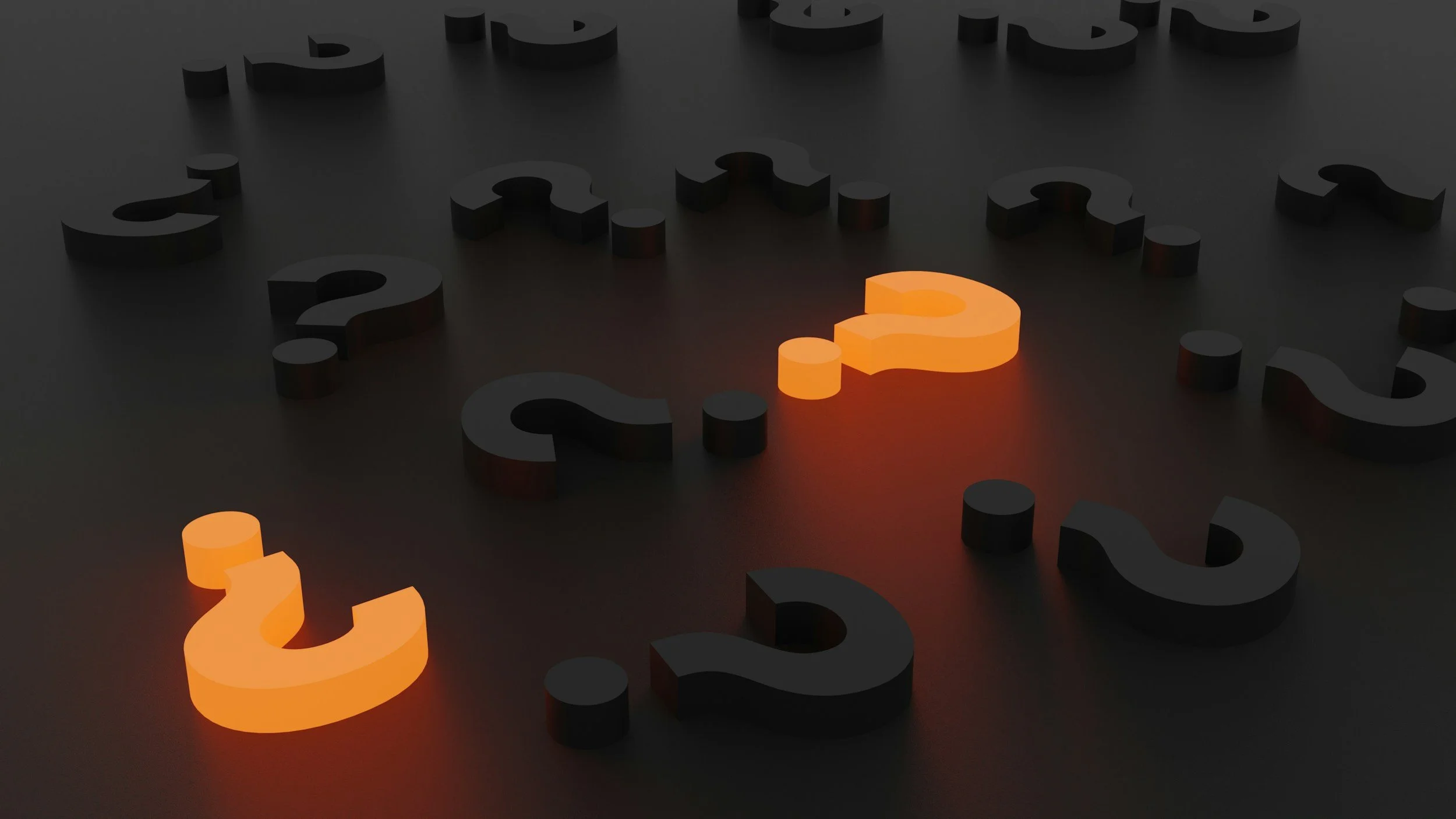
I was asked by team Ferring’s class whether the upside down question (¿) and exclamation marks (¡) appear in other languages and where they came from.
I’ll be honest, I’d perhaps wondered in passing where they came from on occasion, but never made the effort to find out.
¡Until now!
It seems that it’s only Spanish and languages of Spanish origin (like Galician and in the Philippines) use them. (If you know different, please yell and let us know.)
Useful Puctuation
I’m, frankly, a fan. In other languages you generally have to wait til the end of the sentence to know if a sentence is a question or not. Sure, the use of interrogatives like who, what, where, when, why can give you a clue, but not always:
Who dares, wins.
What no-one knew was…
Where the forest ends, urbanisation begins…
Starting a sentence with ‘is’ is a clue, but in general, the reader will have to wait til the end of the sentence to truly know.
Spanish? Bang! Much clearer.
Reading in English you often have to wait to know if something is a question unless there are clues in what’s being said. This can be a limitation if you’re reading out loud, for example.
Like the habit of, generally, putting the adjective after the noun, it’s clearer in Spanishfrom the get go what the speaker is talking about.
It’s one of the things I love about Spanish and I think it seeps into character - the Spanish are generally far more direct.
Where does it come from?
So, from what I’ve researched, the RAE (Real Academia Española - the official regulator for the Spanish language) proposed that it should be used by typesetters as far back as 1754, in the second edition of the Ortografía de la lengua castellana (Castillian ortography) - although it does seem that suggestions to this end may have been made earlier.
It wasn’t adopted immediately - that took time.
That’s to be expected. For example the RAE dictated in 2010 that the B and V should be pronounced as ‘b’ but it’s a little hard to persuade an entire population to change the way they speak overnight. The older generation are going to think the younger generation can’t speak/spell, and vice versa!
Exceptions to every rule
They say every Spaniard has their own political party. When it comes to the use of ¡ and ¿, boy does this become apparent.
Some writers will omit the upside-down question mark when a question is short and unambiguous question eg "Quién sabe?" (Who knows?") Because it is obviously really hard to put in a ‘¿’ for consistency. Maybe it saves printer ink? (Excuse the sarcasm!)
The wonderful Chilean writer/poet Pablo Neruda refused to use it at all. I’ll be honest, I’ve read lots of his poetry and didn’t notice its absence until now. Whilst initially I wondered whether this was a political statement, a rebellion against Spain in favour of Chile, or something to do with his communist principles, in reality he apparently he saw them as interupting poetic flow. His fluid writing style often blurred boundaries between question and statement, so in this context it makes sense. Poets tend to do that - play with language, blur boundaries. We’ll make an exception for him, methinks.
In Galicia, apparently they don’t use the upside down question mark and exclamation mark, although whether that’s just for Gallego (the regional language) to help make it more distinctive I have no idea. And other sources suggest that the norm IS to use it, so I have no answers. Sorry.
In Catalonia, there are distinctly different schools of thought from different language ‘rule makers’ about whether it should be used in Catalan. Glad I’m not sitting Catalan exams!
However…. in ‘Classes with Claire’ we’re learning Castillian Spanish, generic across Spain and Latin America. When you’re talking generally, of course, no-one gives two hoots about the punctuation. If someone writing chooses to leave it out when writing, that’s their choice. When you start to write poems as beautifully as Neruda, you’ve earned the right to play with language as much as you like. Meanwhile I encourage ‘my’ learners to use these useful little punctuation guides for clarity. Being aware that others may not does no harm, but as foreign language speakers the more we can do to make ourselves clear to native Spanish listeners/readers, the better.
Personally, I rejoice in the clarity of Spanish, and that includes these quirky little punctuation marks. (Apparently there were times in the past when it proposed to use them in English, way before the Spanish adoption of them.) There are bound to be exceptions - there are with most things!
It’s nice to know, to be aware, of custom, including this one (or two if you count ‘¡’ and ‘¿’ separately. But no-one’s going to shoot you for your choice to use or reject the upside down symbols. So chill. Don’t let it stress you or take away your enjoyment of this rich and beautiful language.
And thank you, Ferring class, for asking.
They say a great way to learn is to teach. Here lies your proof!