Lanzarote: the name question
So we covered the verb lanzar, to throw, in passing in a class, and one of my students asked if there was a relationship with the name of ‘Lanzarote’.
I looked it up, of course, because the Canary Islands aren’t an area of Spain that I know a lot about.
And it sounded like an easy enough challenge. Wrong.
So hot on the heels of losing several hours of my life trying to clarify a direct translation for petticoat, I take on this challenge. You’d think I’d learn, but…..
My initial hypothesis was maybe it came from ‘lanza rota’ (broken arrow), but according to a blog on the holalanzarote.com website, this is unlikely. Apparently the most common Castilian phrase at the time the name Lanazarote emerged would have been ‘lanza quebrada’. (The name Lanzarote was first recorded th ine 14th Century.)
I’m torn, of course, and reluctant to give up my theory. Lanazarote’s history/folklore apparently has it that the Conquistador Juan de Bethencourt broke his spear to mark the taking of the island by the Spanish.
(So who owned the islands before the Spanish conquered? Suddenly a rich history has opened up in front of me - one I’d never really thought much about. The website iLanzarote has a great little potted history (Lanzarote’s history). It’s very rich, very varied.)
iLanzarote repeats an alternative version - the story that the a sailor from Genoa, Italy, Lancelotto Malocello, (Lancelot) came to the island repeatedly in the 1300’s. This was, it is said, the first documented European ‘rediscovery’ of the Canary Islands in the medieval period. The island could well be named after him.
Early inhabitants of the island, in common with the rest of the Canary Islands, seem to have been from North Africa (Berbers). This is barely surprising. It lies 80 miles north-west of Africa - and is about 600 miles from peninsular Spain.
The island is around 37 miles long and 12 miles wide - about the same width as the Isle of Wight, but double the length. Both seem equally popular: the Isle of Wight attracts 2.4 million visitors annually, Lanzarote 3.4 million. (I expected the difference to be far greater.)
Lanzarote is also known as
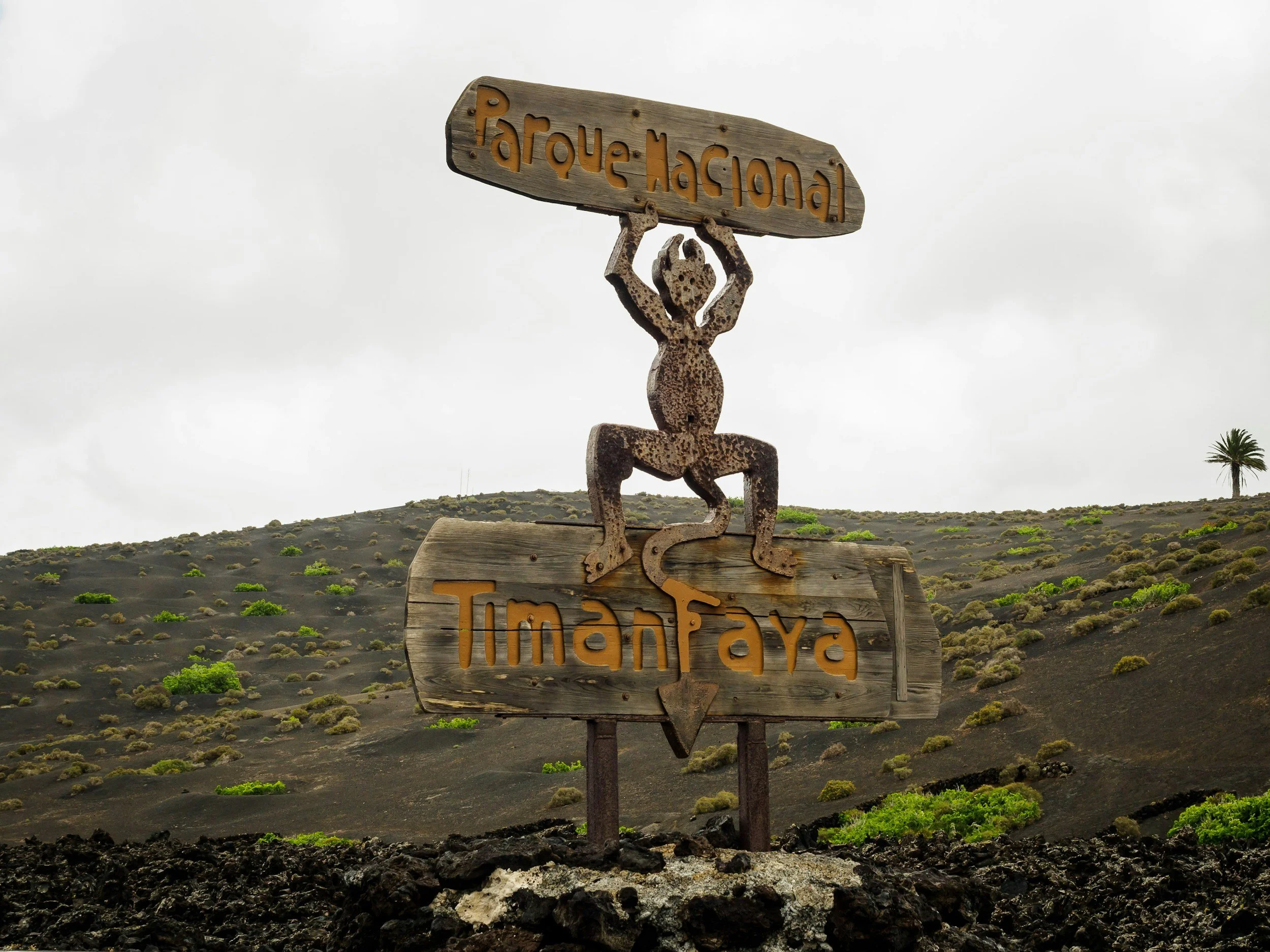
Isla de los Volcanes (Island of the Volcanoes). There are between 25 and 100 ‘volcanoes’ in the island’s national park, Timanfaya (depending on definition and them having been found).The park is named after the island’s only active volcano, Timanfaya.
Isla del Fuego (Fire island). This takes its name from the Montañas del Fuego. The mountains earned their firey name in the 18th and 19th centuries, when the volcanoes were spitting lava and causing fires.
So are we any closer to knowig why Lanzarote is called Lanzarote? Not really, but I now have two great little stories to tell in class if anyone ever asks again.
And if you’re feeling like you want a Spanish version of all of this to dig into, I found a blog on the website Hablar y Decir, Lanzarote: crónica de un nombre. Grab a dictionary!
Canary Islands, Six Fun Facts
There are eight main islands on an archipelago. Lanzarote is furthest to the east, and considered to be the closest to the African continent.
The Canaries were ‘conquered’ in the 15th Century - the first record instance of European ‘settler colonialism’ - and the genocide of the islands’ occupants. The indigenous people were Guanches, a name still sometimes used for people from the Canaries, but not always nicely.
Mount Teide in Tenerife is the highest peak in Spain.
The Canaries have a distinct culture from the rest of Spain, including the style of houses (wooden balcinies, coloured houses), their own form of wrestling, and unique musical instruments.
The islands boast rich fauna and fora, some of it not found anywhere else in the World. The Canary Island Pine has bark so thick it can withstand forest fires. And that little yellow bird that people keep as pets, the canary? It’s named after the islands (not the other way around).
The islands are one of the sunniest places in Europe, with around 3,000 hours of sunshine annually, and an average temperature of 18-24 degrees, kept cool by the Tradewinds.
It’s my strong belief that language and culture go hand in hand, and with Spain’s rich and varied history there’s loads of stories and history to make learning Spanish a memorable experience. And that’s before we even touch on Latin America.
Join us for Classes with Claire to learn Spanish in a way that helps you remember and enjoy what you’re learning.