La Música de Miércoles: La Isla Bonita
Picking this week’s ‘Wednesday Wobble’ was tough - I really wanted something that absolute beginners could follow as last week was quite challenging. It’s hard to just listen and relax when your objective is to learn Spanish.
I looked up all kinds of things.
‘‘Despacito’ (‘A little bit slowly’ in English) was right up there as a favourite, but even the title needs some explaining and it has some quite sophisticated language constructions in it. I was recommended ‘baladas’ (ballads) because they’re slow, but struggled to find something that was clear.I looked up childrens’ songs. And ‘coplas’ (couplets).
But Madonna it is this week - mostly because the song is in English with smatterings of Spanish such as:
¿Como puede ser verdad?
La isla bonita
Te dijo “te amo”
El dijo que te ama
BUT - this video translates the English into Spanish, unusually, and the joy of it being on video is that you can play and replay at your own pace.
Handy hints?
These exercises are just a bit of fun. If you actively dislike Madonna’s music, stop. Stress will make it harder to learn and focus.
Set out to enjoy rather than to ‘learn’. Have some fun with it. I’ve put some exercises here as suggestions, but do your own thing. Play around with it. This is your time, your learning. Knowing the entire score in Spanish will be truly impressive, and I’ll raise my hat to you, but probably won’t be much use in every day life. (Never say never!)
Find a private spot to do these exercises or wear headphones. Otherwise your friends /family may want to disown you!
Make yourself comfortable - cup of tea, glass of wine (Spanish of course!), or a beer (San Miguel? Estrella?)
You’re not at school, you’re doing this for you. There’s no pressure, no competition other than with yourself. So relax, don’t expect miracles and trust the process.
This is ONE exercise. If you’re finding it hard, you’re learning. If it’s stressing you, move on. There’s nothing in here you won’t have another opportunity to learn.
Don’t expect perfection of yourself. A few quotes from Madonna herself:
“Personal growth comes from stepping outside your comfort zone.”
“The only limits are the ones you set for yourself.”
Suggestions for Learning
Absolute Beginners
Find the Spanish phrases identified above in the song itself. Yes you’ll listen to a lot of English as well, but you’re attuning your ear. (Madonna’s pronunciation is more than good enough.)
Your exercises:
Use Google translate or a dicionary to translate the four pieces of Spanish picked out from the song, above, into English.
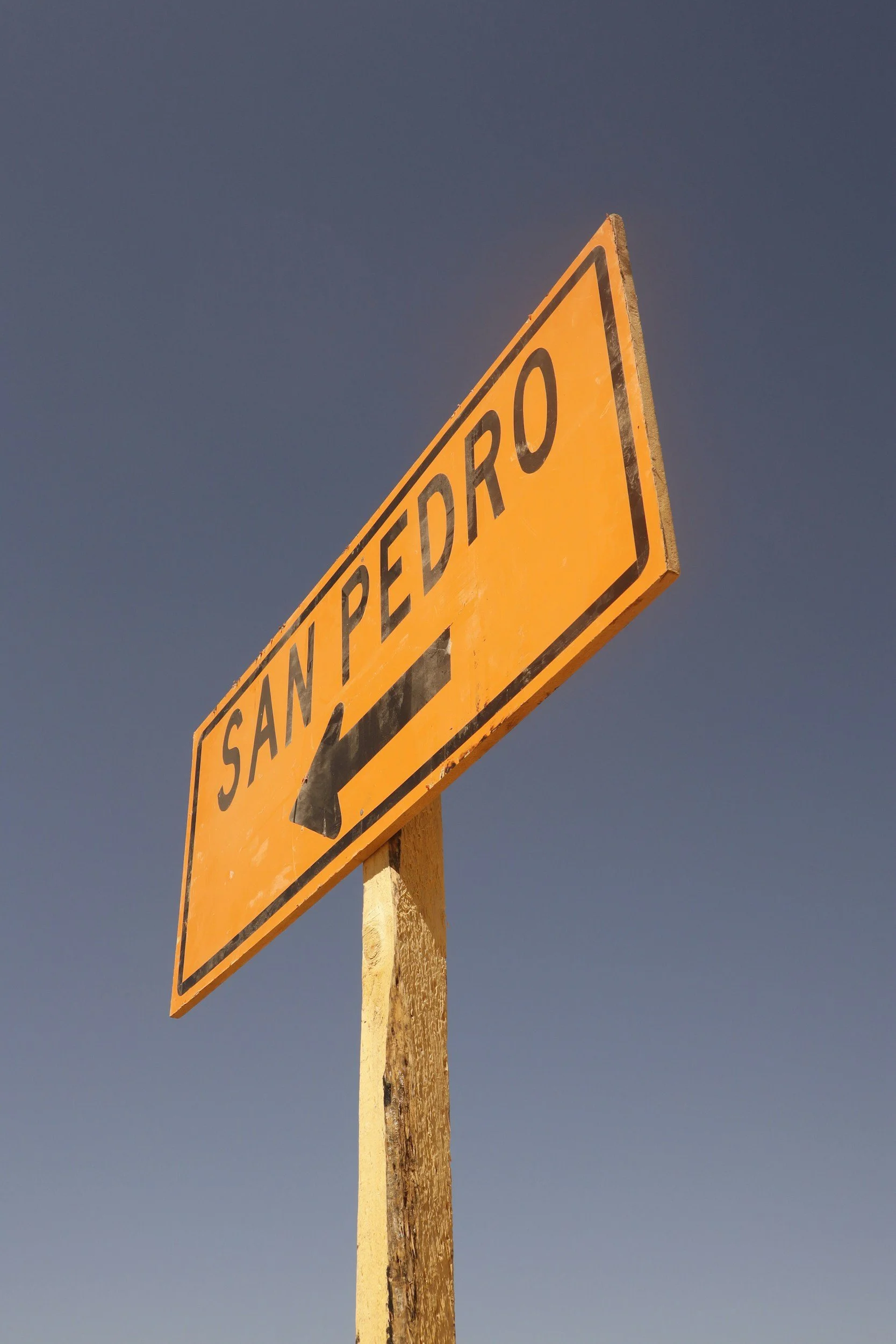
San Pedro is a place, but what does it mean translated?
Beginners
Translate the four pieces of Spanish (above) into English.
San Pedro is a place, but what does it mean translated?
Listen through and read the translations, find the Spanish. It’s entirely up to you how many times you do this - the more you do, the more vocabulary you may pick up.
But don’t stress - this is not an exam. You’re simply familiarising yourself, directing your own learning, so you could also pick out any useful vocabulary (words) that you don’t know as well. Despite the song being about a situation that isn’t every day, for most of us the vocabulary is generally useful and can be applied elsewhere, so your time won’t be wasted.
Intermediate
Look at these two phrases:
Te dijo “te amo”
El dijo que te ama
You have two verbs there, the irregular but important ‘decir’ (to say), and the classic, wonderfully regular ‘amar’, to love. (We love a verb that follows the rules and makes life easy, and ‘amar’ is a perfect example.)
Lots to compare. Both verbs are useful and well worth grabbing your verb tables or phones and putting some effort into familiarising yourself with them.
‘Amar’ is a regular verb, follows the rules, and so, ironically, ithis is one of the times I break my own ‘rules’ (principles) of not teaching to learn ‘by rote’. This is one of those times when it could genuinely be worth learning by rote/memorising, because it serves as a pattern to help with other -ar verbs. Once you’ve learned it, you have the verb endings for any other regular -ar verbs. Learn it once and you’re armed with a really valuable, reusable ‘tool’.
With ‘decir’, life’s a little different.
If you have a book of verb tables, have a read of the full verb to familiarise yourself with it. It’s a gorgeous little rule breaker, and one that you’ll probably hear and use a lot. Don’t stress about learning it - you’ll hear and use it a lot and it will eventually come
If you haven’t got a verb table, this is a fabulousonlin e resource to help: the verb ‘decir’.
Do one, do both - it’s up to you. The more you put in, the more familiar you’ll become.
Bonus exercise
If you have trime….
Listen through as many times as you want/need in order to be able to read the words in the Spanish translation as you simultaneously listen.
That’s it. It’s entirely up to you how far you go with the exercise.
Bonus question
Why is the ‘isla’ (island) called San Pedro, not Santo Pedro?
Advanced
Listen through as many times as you want/need to to be able to read the words in Spanish as you simultaneously listen and read the Spanish.
Look at the construction of the translation. Would you have translated the same way/used the same language?
For example “Warm wind carried on the sea, he called to me” is translated into “La tibia brisa del mar me llamaba.” Does this fully capture what the English says and means to you?
There’s no ‘right’ answer - it’s just raising awareness of the language and getting you to think about and practise what you already know.
Enjoy - if you only get half of it, you’re half way there. Some Spanish will go in just by doing the exercise, and if it’s above your level, that’s fine. Research has repeatedly shown that if you read at above your own level, it will make life a lot easier when you get back to your comfort zone.
Fluent Spanish Speakers
Create you own translation of the song and compare it, side by side, with the translation that’s been done into Spanish here. Can you create a better version?
Next level: Where are the differences, between the translation here and yours and do you understand what the difference is? Can you create a better version?
Join the Fun
We do use music sometimes in ‘Classes with Claire’, but I’ve only ever run one class where it was the focus of a class. Catching the words and variable translations make listening and translating a tough exercise - but someone has already done the translation into Spanish for you in this case. (Thank you!)
If you enjoyed our ‘Música de Miércoles’ and want help taking your Spanish to a whole new level, - or getting started with Spanish, Classes with Claire offers Spanish classes online and in the West Sussex area in person.